

When I was a boy, words bounced off me because I was taught that they were supposed to. I can still hear my mother saying it. Some kid had called me a name, and I had come home stung by it, looking for someone to be angry on my behalf, and she did not get angry. She did not call the school, and she did not ask me to describe my feelings so we could sit with them together. Instead she looked at me and said something that would sound almost cruel to a modern parent:
“That says more about him than it does about you.”
And then came the line every kid of my generation had carved into them, the one about sticks and stones breaking bones while names never hurt.
That was the whole intervention. There was no follow-up, no counselor, no incident report. There was only an expectation, delivered without apology, that I would absorb this minor injury and carry on, and that the carrying on was itself the point.
My teachers operated the same way, treating playground name-calling as a kind of weather. It happened, it was unpleasant, and it was not an emergency, so the adults did not swoop in to adjudicate every insult. Looking back now, I understand that this was not negligence at all. It was a kind of wisdom they probably could not have put into words, because what they were really doing was letting us build something.
Here is what I learned in that schoolyard, and I learned it in my body rather than from a worksheet. If you reacted to the name-calling, it got worse; if you flinched or cried or ran to tell, you became the kid worth targeting.
But if you genuinely did not care, if you let the words roll off the way my mother insisted they should, the whole enterprise lost its fuel and quietly died. The kids hurling names were never really after the words. They were after a reaction, and if you denied them the reaction, you starved the behavior at its root.
Notice what that built. It built a protective layer, a working perspective in which other people’s contempt was survivable and, more than that, was largely irrelevant to my sense of my own worth. I learned that my thoughts and emotions belonged to me, and that no string of syllables from another person’s mouth had the power to reach in and rearrange the furniture without my permission.
That layer is mostly gone now. We took it from an entire generation, and I watched it happen in real time.
2004
In 2004 I was working in a middle school while I attended graduate school, and the air had already changed. Anti-bullying was the cause of the moment. Safe schools, posters in the hallway, assemblies, pledges. And underneath all those good intentions, which I do not doubt were sincere, a quiet and enormous redefinition was taking place: the word “bullying” was expanding.
It used to mean something fairly specific, like a bigger kid shaking down a smaller one for lunch money, or a sustained and targeted campaign of physical intimidation. Now it was swelling to absorb almost any typical social challenge a child might encounter, from exclusion to teasing to eye-rolling, and above all, words.
Name-calling, the very thing my mother had waved away in thirty seconds, was being reclassified as a serious harm that required adult intervention, documentation, and often a referral.
This, if I am honest, is the moment I began to understand the disaster we were building. Not because anti-bullying was a bad goal in itself; bullying is real, and some children are genuinely tormented. The problem was what the expansion of the definition was doing to the children themselves.
I watched kids come undone over name-calling, and not because the names had gotten worse. The names were the same names they had always been. What had changed was that we had taught these children that words were injuries, that injuries demanded a response, and that the correct response was to escalate to an authority.
So that is what they did.
They went to teachers, they filed reports, they sat in offices and described, with the gravity of crime victims, what someone had called them at lunch. And every single time they did it, they were rehearsing fragility, practicing the exact reaction that in my schoolyard would have guaranteed the cruelty continued.
We had not made them safer. We had stripped off the protective layer and called it kindness.Worse, we had handed them an identity, because there was now a thing a child could be: a victim of bullying.
In the fear-based culture of the American public school, words were quietly being elevated to the status of violence, until a slur and a punch began to live in the same category. The child who was called a name was now a victim of something like an assault, and victims of assault, naturally, were sent to therapy.
We medicalized the playground.
Concept Creep
There is a psychologist named Nick Haslam who gave this exact phenomenon a name, and once you have the name, you cannot stop seeing it everywhere. He calls it concept creep, and his observation is as simple as it is devastating.
Over the last few decades, the concepts we use to describe harm, words like trauma, abuse, bullying, violence, and disorder, have steadily crept outward to cover milder and milder experiences. A word that once marked a severe and specific event slowly stretches until it covers the ordinary challenges of being alive.
Trauma used to mean the survivor of a war or a violent attack; now it can mean a hard week. Abuse used to mean a fist; now it can mean a tone of voice. Bullying used to mean a sustained campaign of cruelty; now it can mean being left out of a group chat.
This is not a small linguistic shift, because when you expand the concept of harm, you also expand the population of the harmed. You manufacture victims by definition, not because anything in the world got worse, but because you moved the boundary of the word.
Running alongside concept creep is a second mechanism, even more insidious, described by the philosopher Ian Hacking, who called it the looping effect. His insight is that human categories are not like categories in nature. A rock does not know it has been classified as a rock and does not change its behavior in response to the label.
A child is different.
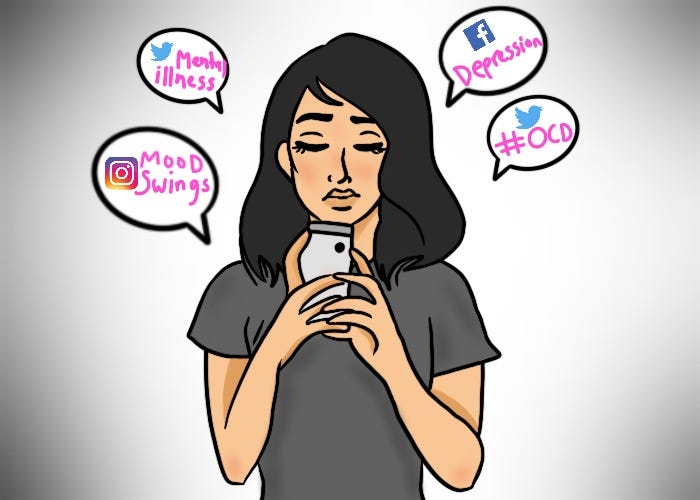
When you invent a category of person and give it a name, the people inside that category begin to live differently, reshaping themselves around the label and behaving in the ways the category predicts. That behavior then loops back and appears to confirm that the category was real and waiting there all along. Hacking called this making up people: you name a kind of person into existence, and then the named person obligingly comes into being.
Put concept creep and the looping effect together, and you have the engine behind everything I witnessed in that middle school. First you stretch the word “bullying” until name-calling falls inside it, which is concept creep.
Then you tell a child that he is a victim of bullying, that words are wounds, that this is something done to him which he cannot possibly withstand on his own. And the child, being human rather than a rock, becomes exactly that. He starts reacting the way a victim reacts, and he loses the protective layer because we told him he was never supposed to have one in the first place. The fragility we predicted, we created, and then we pointed at the fragility as proof that the children had needed our intervention all along.
The psychiatric industrial complex and therapy culture predictably benefit from this creation.
2014
About ten years after that middle school, I had a student I have never quite been able to forget. She was refusing to go to school, which is one of the most common situations I encounter and also one of the most treatable.
It was standard school-related anxiety, the kind where avoidance feels protective in the moment and quietly makes the fear worse over time. The path out is well established: you support the child with skills, you reduce the avoidance gradually, and you let her discover through her own direct experience that she can tolerate the thing she fears, and that the fear recedes once she stops running from it.
Anxious children do this all the time. They adapt, they overcome, and it is one of the most reliably hopeful things in my entire profession.
Her parents would not allow it. They facilitated the avoidance and let her stay home, and they rejected my recommendations, which were exposure-based and built on the simple, humane premise that you do not let a child’s fear make the child’s decisions. The mother in particular had constructed an explanation that I could not move her off of: her daughter, she told me, was traumatized.
By what, I asked.
“Her best friend had moved away.”
I want to be careful here, because I am not a monster, and the loss of a childhood best friend is a real grief that hurts and is supposed to hurt. But this mother did not mean that her daughter was sad, or grieving, or moving through a painful transition she would eventually come out the other side of.
She meant trauma in the full clinical sense. She believed her daughter had been wounded in a way that required trauma therapy, that she had been damaged, that something had been done to her from which she might never recover on her own. The sheer degree of fragility she had assigned to this perfectly ordinary girl was, frankly, alarming.So I did what I am trained and obligated to do, which is to try, gently, to educate her.
I explained that her daughter did not have PTSD, and I walked her through what normal child development actually looks like, how children lose friends and feel the loss and then, given the chance, display a resilience that would astonish you. Then I offered her the single most important distinction in my entire field, the one we have very nearly lost as a culture:
trauma is not a synonym for emotional pain. Pain is not damage, hurt is not injury, and a feeling is not a wound. These distinctions are the difference between raising a person who can withstand life and raising a person who believes, sincerely, that ordinary life is more than she can bear.
She was offended.
I had taken something away from her, and I need you to see what it was. The diagnosis was not a burden she hoped to escape; it was a possession she was defending. Concept creep had stretched the word “trauma” wide enough to cover her daughter’s sadness, the looping effect had handed her daughter an identity to step into, and I had walked into the room and suggested the whole edifice was unnecessary.
To her ear, I was not reassuring her. I was dismissing her, failing to take her daughter seriously, when in truth I was taking her daughter more seriously than anyone else in the room, seriously enough to believe she could actually heal.
The Slippery Slope
I want to follow this all the way out, because the schoolyard is not where it stops. Once a culture decides that words are a form of violence, it will eventually conclude that the state must police words the way it polices violence. This is not a slippery-slope hypothetical; it is already the law in countries that look a great deal like ours.
Look at the United Kingdom. In 2024, according to police data compiled and reported by the British press, somewhere in the neighborhood of ten thousand people were arrested for posting messages online that were deemed “grossly offensive” or “indecent,” a standard so elastic it could swallow almost anything. Sit with the vagueness of that phrase for a moment.
Grossly offensive to whom, and measured how?
It is concept creep written directly into the criminal code, and the people on the wrong end of it go to jail.
Consider the case of the Irish writer Graham Linehan, who created some of the most beloved British comedy of his generation. In September 2025 he landed at Heathrow and was met by five armed officers, then arrested over three posts on the platform X, posts critical of transgender activism that he had written while sitting in America.
Five armed officers, for tweets, in a country where, by the police’s own admission, most burglaries go unsolved. You do not have to agree with a single word Linehan wrote to understand that this level is state control is a dystopian nightmare.
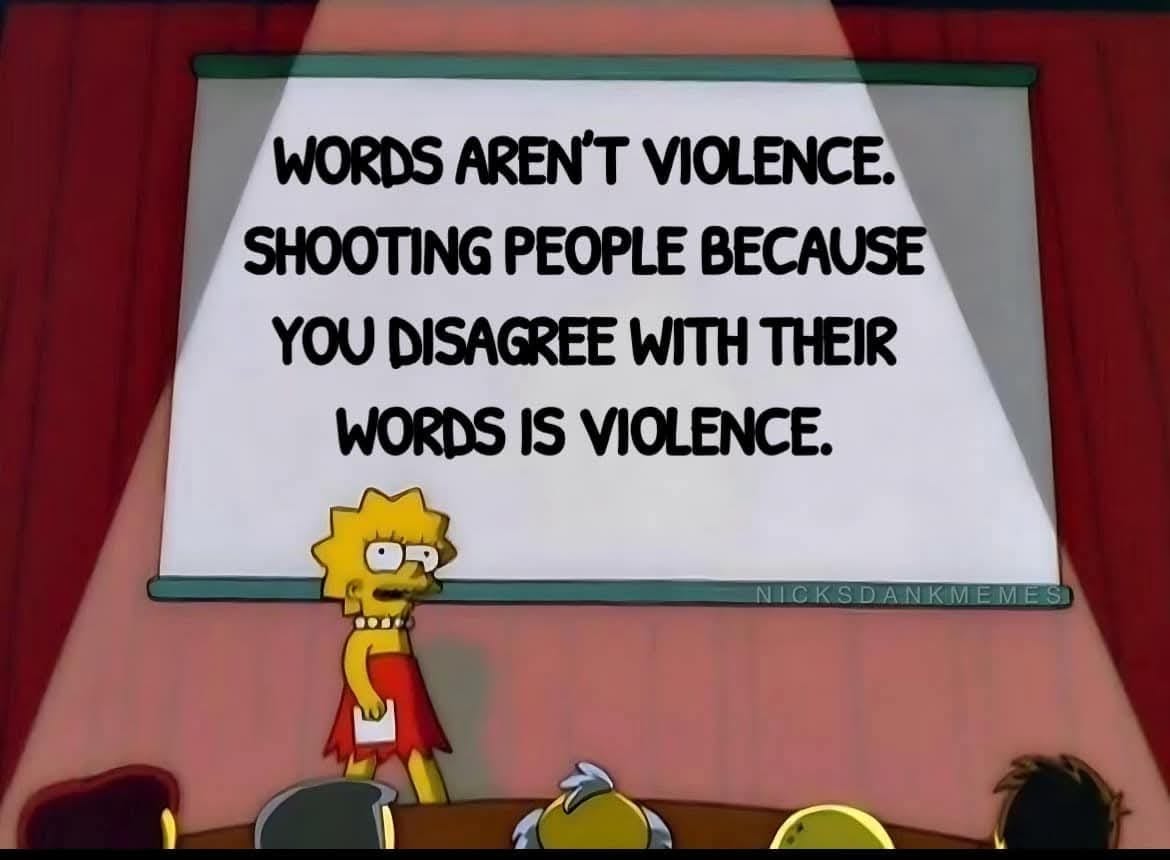
Once that premise is accepted, the armed officers at the gate are not an aberration; they are the logical conclusion. The same redefinition that once sent a middle schooler to the counselor for being called a name now sends a grown man to a holding cell for a tweet.
This is what concept creep does when it finishes its work. It does not stay in the therapist’s office. It migrates into the courthouse.
This is the part I most need you to sit with, because the individual stories are only worth telling if they point at the larger thing. We have raised a generation inside a machine that manufactures fragility and then turns around and sells the cure.
We expanded the concepts of harm until ordinary life itself qualified as injury, we handed children the identities of the wounded and the disordered, and being human, they grew into those identities. Then we looked out at a population of young people who genuinely cannot cope, who are anxious and avoidant and convinced of their own brokenness, and we called it a mental health crisis, as though it had simply descended on us out of a clear sky.
It did not descend on us. We built it.
We built it brick by brick in the name of safety and kindness and stigma reduction. The crisis is not a mystery; it is a harvest. We planted fragility in a generation, and now we stand in the field acting astonished at what came up.
Here is where the story turns dark, because there was a final step, and it was almost inevitable. Once you have convinced a child that her ordinary pain is a clinical wound, the next move follows with a grim logic.
Against my recommendation, this mother who believed her daughter was traumatized, took her daughter to the pediatrician for an SSRI. Of course she did, because the logic was already complete: if the girl was traumatized, if her suffering was a disease rather than a developmental passage, then the suffering demanded a drug the way a lit fuse demands the explosion. I had no part in it and had argued against it, but it happened anyway, because the entire framework she had been handed pointed in only one direction.
The case, as you have probably guessed, was not a success. They left me and found another therapist who would agree with them, who would validate the trauma and support the avoidance and bless the medication and the story, because there is always someone who will tell you what you want to hear, and our field is unfortunately full of them.
I still wonder what happened to that girl, and I think about her more than I should. She was bright and anxious and entirely capable of recovery, and instead she was handed a diagnosis, a drug, and a permanent belief that she was too fragile for the world.
But I do not really have to wonder, do I?
I can see what happened to her, multiplied by millions, all around me: a generation on SSRIs and still struggling to cope, adults now, many of them, who never developed the protective layer, who were taught that their feelings were injuries and their injuries were diseases, and who reach for a prescription or a diagnosis the way my generation once reached for a schoolyard rhyme.
I used to believe this was all simply a tragic error, a well-meaning culture that overcorrected, that loved its children so much it accidentally crippled them. There is real truth in that, and most of the people enforcing this framework, the teachers and parents and counselors, are sincere and kind. But I no longer believe the system itself is innocent, and I will tell you plainly why.
A fragile population is a profitable population and a governable one. You do not need a conspiracy to see it; you only need to follow the incentives, because incentives reward an outcome whether or not anyone conspires to produce it.
A pharmaceutical industry that defines more and more of life as disease sells more and more drugs. A mental health industry that pathologizes ordinary suffering acquires more clients in perpetuity, since you can never quite be cured of being alive. And a state that has persuaded its citizens that words are violence quietly acquires the moral license to police speech, which happens to be the one power nearly every government on earth has always wanted and rarely been handed so willingly.
Look again at those armed officers at Heathrow. That power was not seized in a coup; it was granted, gratefully, by a culture that had already been taught that words wound, that offense is harm, and that the vulnerable must be shielded from mere syllables.
We disarmed ourselves.
We handed over the protective layer voluntarily, first in the schoolyard and later in the law, and the institutions that profit from our fragility were only too happy to accept the gift. I do not need to prove a smoke-filled room. I only need to point at who benefits, and the beneficiary is never the fragile child, or the medicated adult, or the man in the holding cell. The beneficiary is always the industries and authorities that grow stronger precisely as we grow weaker.
So what do we actually do?
We start by telling our children the truth, which is that they are far stronger than the culture insists they are. We let them feel the sting of an insult and discover, firsthand, that they survive it.
We stop calling pain damage and stop calling sadness trauma, and we stop reaching for a diagnosis every time a child runs into the problem of being human. We restore the protective layer deliberately, one child at a time, by refusing to strip it away in the first place.
We also learn to be suspicious of the expanding word. Whenever someone stretches a concept, whether it is trauma or harm or violence or safety, to cover something it never used to cover, we ask the question almost no one bothers to ask anymore: who benefits from this new definition, and whose power grows when the word grows?
And we defend speech ferociously, including the speech we hate, because the premise that words are violence is the master key that unlocks every other tyranny. The moment you accept it, the armed officers are coming, and not only for the people you happen to dislike. Eventually they come for you.
Finally, we reclaim, without apology, the unfashionable wisdom of my mother standing in that kitchen.
A painful feeling is not an injury.
Other people’s contempt says more about them than about you.
Sticks and stones will break my bones. That part was always true.
But names will never hurt me was never a denial of pain; it was a declaration of sovereignty.
It was the most psychologically protective sentence we ever taught a child, and we threw it away, and now we are paying for it with a generation that no longer believes it is true.
It is time to teach it again.